
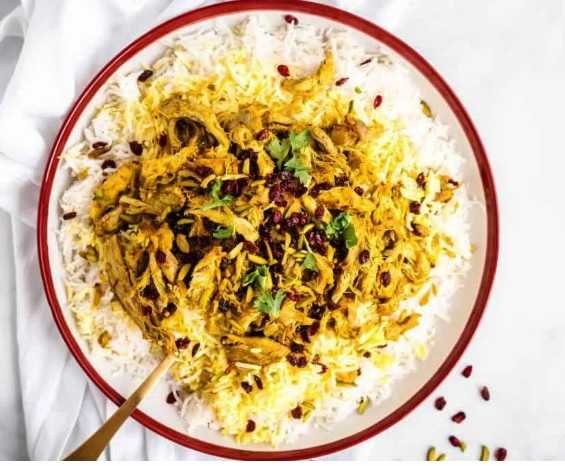
Zereshk polo is Persian saffron rice with barberries: fluffy golden grains topped with bright, gently tart fruit. The contrast between warm saffron and refreshing barberries makes it equally appealing for a celebration or an everyday meal.
Ingredients for zereshk polo
- 250 g basmati rice
- 0.1–0.15 g saffron threads
- 2 tablespoons warm water or warm milk
- 40 g dried barberries (zereshk)
- 30 g butter, divided between the rice and topping
- 1 teaspoon sugar
- 1 teaspoon salt, or to taste
- Enough water to parboil the rice freely, then drain
For this parboiling-and-steaming method, use a generous pan of water. The original approximately 450 ml water ratio is more appropriate for absorption cooking, which is a different method.
How to make zereshk polo
- Infuse the saffron. Lightly crush the threads and steep in warm water or milk for 10–15 minutes.
- Rinse and parboil the rice. Wash until the water runs mostly clear. Cook in a generous pan of lightly salted boiling water until the grains soften outside but retain a firm centre. Drain well.
- Steam gently. Melt part of the butter in a saucepan, add the rice loosely and pour over the saffron infusion, including the threads. Cover and finish over low heat until tender. Rest briefly off the heat and fluff carefully.
- Prepare the barberries. Rinse them briefly in cold water to remove dust and drain well. Warm the remaining butter in a small pan. Add the barberries and sugar, turning gently just long enough to warm the fruit and soften its tartness. Avoid prolonged cooking or dark browning.
- Serve. Arrange the rice on a platter and scatter the warm barberries over it. Serve alone, with vegetables or alongside chicken or lamb.
Flavour and common mistakes
Keep the topping gently sweetened rather than sugary: the barberries should retain their refreshing tartness. Saffron adds colour and depth without dominating.
- Too much saffron: use a measured dose so the balance stays delicate.
- Overheated barberries: warm briefly; long cooking can dry or scorch them.
- Overcooked rice: drain with a firm centre because steaming finishes the grains.
- Heavy stirring: handle the rested rice gently to preserve its texture.
Frequently asked questions
What is zereshk polo?
A Persian rice dish combining saffron rice with dried barberries, known for its golden colour and tart topping.
How much saffron do I need?
Use 0.1–0.15 g saffron threads for 250 g dry rice.
Can I serve it vegetarian?
Yes. The rice and barberry topping contain no meat. Serve with vegetables or a separate protein of your choice.
Explore more Persian-inspired rice
Try sabzi polo with fresh herbs, or saffron rice with almonds and raisins.
Part of the main dishes in Saffron Recipes at the Saffrona Academy.
Further reading
Traditional and Modern Uses of Saffron, for broader background on the plant and its uses rather than evidence of health effects from this rice dish.