
Saffron vegetable skillet is a versatile vegetarian main course full of colour and delicate flavour. Fresh vegetables take the lead, while a small amount of saffron adds warmth and depth without making the dish heavy.
This recipe rewards restraint. Gentle heat and careful timing keep saffron’s aroma subtle and allow the vegetables’ own flavours to shine. Serve it on its own or use it as a base for other vegetarian and vegan meals.
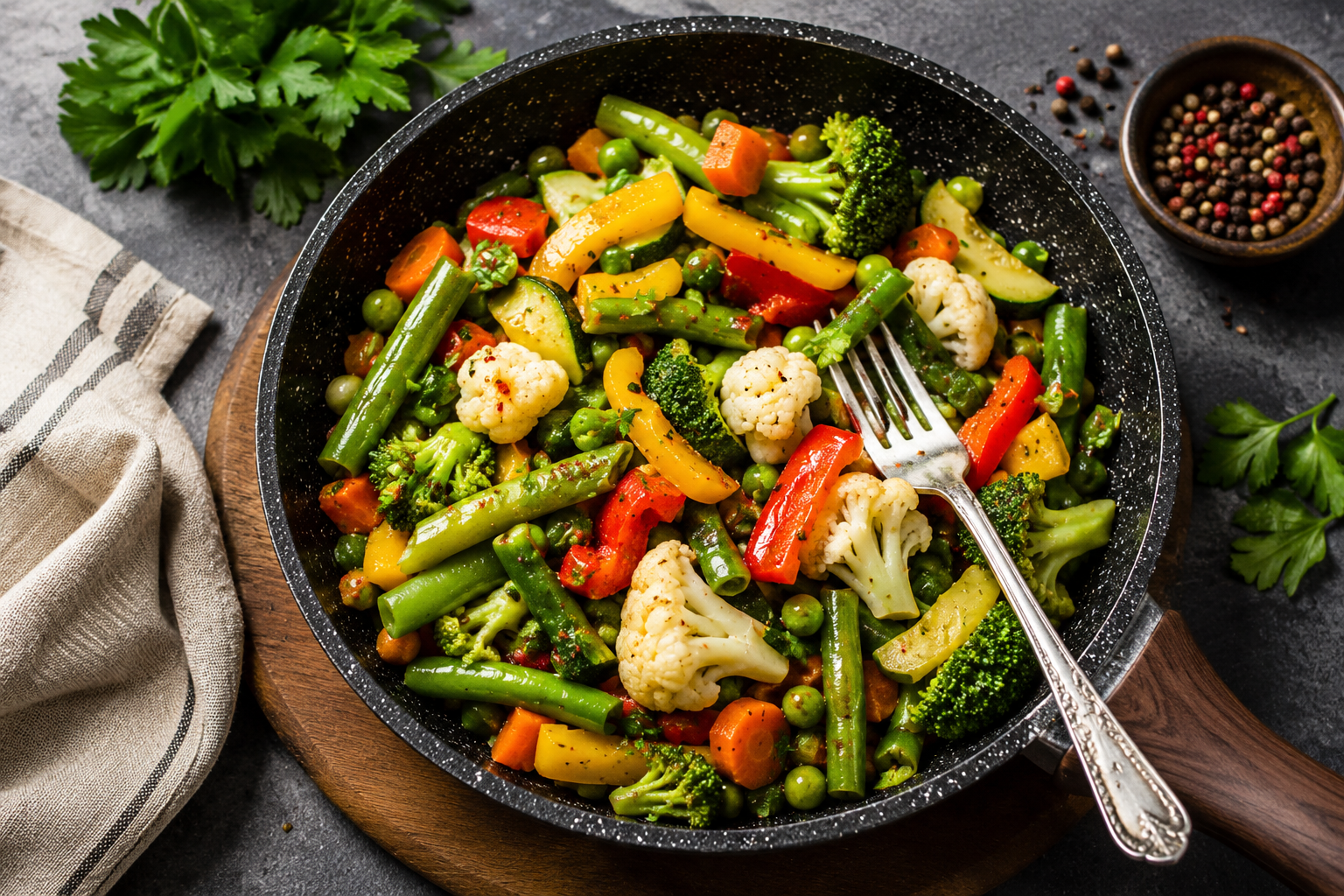
Ingredients for 2 servings
Choose a mix of vegetables with complementary flavours and textures. Adapt the selection to the season.
- 1 courgette, sliced or diced
- 1 red pepper, cut into strips
- 1 carrot, finely sliced
- 1 small aubergine or fennel bulb
- 0.1 g saffron threads
- 2 tablespoons warm water or warm plant-based milk
- 2 tablespoons olive oil
- 1 small onion or shallot, finely chopped
- Salt, to taste
- Freshly ground black or white pepper
- Optional: fresh parsley or thyme
Saffron adds a golden colour and a fine aroma that brings the different vegetables together.
Prepare the saffron infusion
Steep the threads in warm water or plant-based milk for 10–15 minutes. Do not fry the threads directly in hot oil. Add the infusion towards the end of cooking, when the vegetables are tender but still retain their texture.
Method, step by step
- Prepare the vegetables. Cut them into even pieces so they cook consistently.
- Soften the onion. Warm the olive oil in a large frying pan. Gently cook the onion or shallot until translucent, without browning.
- Start with firmer vegetables. Add carrot or fennel and cook gently for a few minutes.
- Add the remaining vegetables. Follow with courgette, pepper and aubergine if using. Turn regularly and avoid heavy browning. Cook until tender.
- Add the saffron. Reduce the heat and pour the prepared infusion evenly over the vegetables. Cover briefly to let the flavours combine.
- Finish. Season with salt and pepper and add fresh herbs if using.
Flavour and texture
The vegetables should keep their individual flavours while saffron supplies a warm connecting note. Mild seasoning and gentle cooking give a balanced dish that works well as part of a vegetarian meal.
Common mistakes to avoid
- Adding saffron too early over high heat: infuse it separately and add it near the end.
- Heavy browning: strong roasted flavours can mask the delicate saffron note.
- Too much saffron: use the measured quantity to keep the flavours balanced.
Frequently asked questions
How much saffron do I need?
Use 0.1 g saffron threads for two servings.
Is this dish vegan?
Yes. It uses olive oil and either water or plant-based milk.
What can I serve with it?
Saffron rice, couscous or flatbread make suitable accompaniments.
More saffron recipes
Explore Saffron Recipes in the Saffron Academy.
Further reading
For a food-science perspective, see research on saffron extraction methods, antioxidant activity, phenolic and crocin content, and the oxidative stability of vegetable oils. This study concerns extracts and oils rather than this recipe.