
Saffron innovation includes more than a new growing system. It also means connecting cultivation knowledge, post-harvest quality, business planning and evidence about the crop into information that growers can use and assess.
Education and controlled cultivation · Provider-reported technology claims · Practical questions for growers · Clear separation between crop research and medical evidence.
A book and course for saffron growers
SaffroSystems describes its Saffron Mastery Course and book as resources covering indoor and outdoor cultivation, corm selection, harvesting, drying, grading, storage, economics and marketing. Its services page also describes a community and expert events.
The providers’ account of the SaffroSystems and Veles Farming collaboration identifies Saffron: From Fields to Fortune and its authors Khalil Mirza, Viktor Kulcsar and Davide Celentano. The project aims to bring agricultural, technical and business topics together.
These descriptions explain the programme’s intended scope. They do not establish that every lesson or claim has been independently validated, and this article is not a review of the full paid course.
From open fields to controlled environments
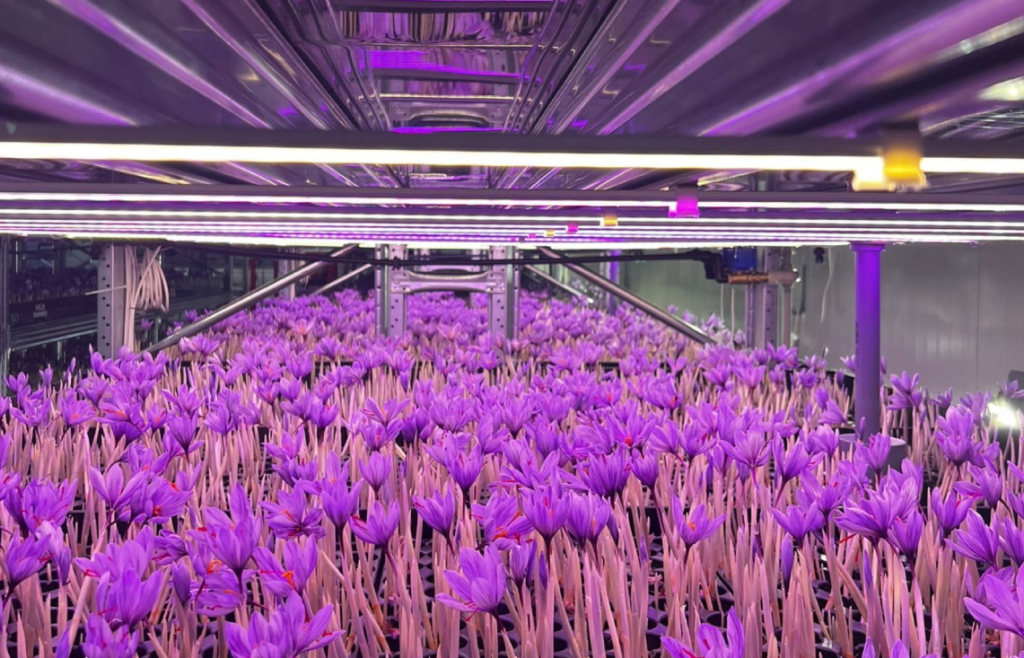
Indoor systems offer a way to manage environmental variables deliberately. Their performance still depends on the biological cycle, planting material, equipment and operating decisions.
The collaboration’s promotional account reports up to four flowering cycles per year in Veles systems. That is a provider-reported claim, not a general guarantee for any indoor farm. A useful assessment needs to specify the corm cycle, time period and yield per unit of planting material.
Questions that make innovation practical
- Agronomy: Which starting corms and growing conditions produced the reported result?
- Measurement: Are flower counts, dried stigma yield and quality measured separately?
- Resources: What energy, water, space and labour does the whole cycle require?
- Automation: Which tasks are demonstrated, and which remain development goals?
- Economics: Do the figures include equipment, failed batches, post-harvest work and marketing?
- Quality: Is the product traceable, and do reports correspond to the batch sold?
Technology can help answer specific problems. A system should be judged by transparent results rather than by labels such as AI-powered, sustainable or revolutionary alone.
Learning as an ongoing process
A structured course can help organise questions and connect growers. Its strongest practical value comes when learners compare the material with their local conditions, record results and understand the limits of each recommendation.
Likewise, a chapter discussing medicinal research should distinguish cell experiments, animal studies and human trials. Crop productivity and clinical effectiveness require different evidence.
Saffrona Academy’s perspective
We value a conversation between traditional growing experience and careful scientific work. Our aim is to explain the evidence clearly, preserve the crop’s connection to growers and make saffron knowledge easier to navigate.
Primary information and further reading
- SaffroSystems: course, book and community information
- SaffroSystems’ account of the collaboration and cultivation claims
Continue exploring the Saffron Academy or discover Saffrona saffron for your kitchen.