
• Home
  • Shop Saffron
  • Saffron Academy
  • For Businesses
  • Our Story
    • Saffron Women of Herat
    • About Saffrona
  • Deutsch
Menu
Search
Find your saffron
Trending searches: Saffron threads Saffron powder Saffron tea Gift box Gourmet set
Saffrona logo – Afghan saffron from Herat
Compare

No products in the compare.

Return To Shop

View Compare

0 Compare
Wishlist

No products in the wishlist.

Return To Shop

View Wishlist Add all to cart

0 Wishlist
Cart

No products in the cart.

Return To Shop
0 Cart
  • Home
  • Shop Saffron
  • Saffron Academy
  • For Businesses
  • Our Story
    • Saffron Women of Herat
    • About Saffrona
  • Deutsch
DeutschDE/EnglishEN
ISO 3632-1:2025 · SAFFRON QUALITY

Saffron Extra Class: The Highest Quality Class under ISO 3632-1:2025

Saffron Extra Class is the highest quality class defined in the current ISO 3632-1:2025 standard.

Introduced with the third edition of ISO 3632-1 in 2025, Extra Class sits above Class I, Class II and Class III. Unlike loosely defined marketing terms such as “premium” or “super premium”, Extra Class is based on measurable requirements for saffron quality.

Extra Class Requirements See a Laboratory-Tested Example ↓
Standard
ISO 3632-1:2025
Edition
Third edition · July 2025
Highest class
Extra Class
Applies to
Saffron from Crocus sativus L.
Definition ISO 2025 Requirements Quality Parameters Extra Class vs Class I Premium vs Extra Class Laboratory Example Afghanistan FAQ Sources
DEFINITION

What is Saffron Extra Class?

Saffron Extra Class is the highest quality class in ISO 3632-1:2025. The classification was introduced in the third edition of the standard and created a new quality level above the previously established Classes I, II and III.

The classification is based on analytical parameters used to assess key characteristics of saffron, including its colouring strength, bitterness and aroma-related compounds.

A saffron product should therefore not be described as Extra Class merely because of its origin, appearance, price or marketing positioning. The classification depends on measurable criteria defined by the applicable standard.

ISO saffron quality classes
Extra Class · Highest
Class I
Class II
Class III
THE 2025 REVISION

What changed with ISO 3632-1:2025?

ISO 3632-1:2025 is the third edition of the international standard covering specifications for saffron. It was published in July 2025 and replaced ISO 3632-1:2011.

One of the most significant changes was the introduction of “Extra Class” into the saffron classification system. As a result, Class I should no longer automatically be described as the highest ISO saffron class when referring to the current 2025 edition.

Extra Class is not a marketing label invented by saffron sellers. It is a defined classification introduced in the current ISO standard.

MEASURABLE REQUIREMENTS

Which criteria are recorded in the Eurofins assessment?

The updated Eurofins report AR-733-2025-00206306-02, dated 24 August 2026, records the following assessment criteria for sample L2025-01.

Quality parameter Criterion in the Eurofins report What it indicates
Crocin / colouring strength ≥ 230 Colouring strength
Picrocrocin / bitterness ≥ 80 Characteristic bitterness
Safranal 20–50 Aroma-related parameter
Moisture — threads ≤ 12% Moisture control
Moisture — powder ≤ 10% Moisture control

These parameters should not be interpreted independently as a complete measure of saffron quality. Classification requires consideration of the applicable specifications as a whole.

UNDERSTANDING THE TEST VALUES

Crocin, Picrocrocin and Safranal: What is actually measured?

Crocin

Crocin is associated with saffron's characteristic colouring strength. A higher analytical value reflects stronger colouring capacity under the specified test method.

The Eurofins assessment records a minimum colouring-strength value of 230 for Special Grade.
Picrocrocin

Picrocrocin is associated with saffron's characteristic bitter taste and is another important analytical parameter used in saffron quality assessment.

The Eurofins assessment records a minimum bitterness value of 80 for Special Grade.

Safranal

Safranal is an important aroma-related compound associated with saffron's characteristic fragrance.

The Eurofins assessment records a Safranal range of 20–50. The result for batch L2025-01 is 30 ± 3.

A single high Crocin, Picrocrocin or Safranal result does not by itself establish the overall quality class of a saffron product.

AN IMPORTANT DISTINCTION

Extra Class vs Class I: What is the difference?

This distinction became particularly important after the publication of ISO 3632-1:2025.

Under the earlier classification system, Class I was commonly described as the highest saffron quality category. The 2025 revision introduced Extra Class above Class I.

Extra Class › Class I › Class II › Class III

This means that older websites, product descriptions and articles that still describe Class I as the highest possible ISO classification may be referring to an earlier edition of the standard.

STANDARD VS MARKETING LANGUAGE

Is Extra Class the same as “Premium Saffron”?

No.

Terms such as Premium Saffron, Super Premium, Grade A or Superior Saffron are frequently used commercially, but they do not by themselves represent the formal ISO Extra Class classification.

Extra Class, by contrast, refers to a defined quality class within ISO 3632-1:2025.

This distinction matters especially for professional buyers, food businesses and consumers who want to compare saffron using measurable criteria rather than marketing terminology.

A LABORATORY-TESTED EXAMPLE

Saffrona batch L2025-01: Special Grade in the Eurofins report

Eurofins assessed the submitted saffron sample from batch L2025-01. Based on the analyses performed, the report states that this sample meets the requirements for Special Grade under ISO 3632-1:2025.

The updated Eurofins report for batch L2025-01 records the classification using the wording “Special Grade”. In ISO 3632-1:2025 itself, the official English class designation is “Extra Class.”

Crocin
279 ± 7
Picrocrocin
104 ± 3
Safranal
30 ± 3
Moisture
7.5 ± 1.2%
Crocin: 279 Eurofins assessment minimum: 230
The central result is approximately 21% above the minimum threshold.
Picrocrocin: 104 Eurofins assessment minimum: 80
The central result is 30% above the minimum threshold.

These percentages describe only the numerical distance from the respective minimum thresholds. They are not percentage measurements of overall saffron quality.

TRANSPARENCY

Laboratory documentation for batch L2025-01

Batch L2025-01
Sample number 733-2025-00206306
Report number AR-733-2025-00206306-02
Report date 24 August 2026
Sample received 26 September 2025
Testing period 26 September–24 October 2025
Reporting laboratory Eurofins WEJ Contaminants GmbH, Hamburg
Saffron analysis Eurofins Analytics France – Authenticity

Why is the complete laboratory report not published here?

The laboratory report is subject to publication conditions. For this reason, Saffrona does not reproduce the complete report or publish individual scanned pages from it.

Instead, the relevant analytical results, report identifiers and laboratory information are presented here transparently so that the basis of the classification can be understood.

ORIGIN AND MEASURABLE QUALITY

What does Extra Class mean for Afghan saffron?

Afghanistan, particularly its western saffron-growing regions, has developed into an important origin for high-quality saffron.

However, geographical origin alone does not establish an ISO quality class. For Afghan saffron, measurable classifications such as Extra Class can help distinguish verified analytical quality from broad claims based only on origin, appearance or commercial positioning.

For producers and professional buyers, measurable quality can also strengthen traceability, quality assurance, comparability and access to international food markets.

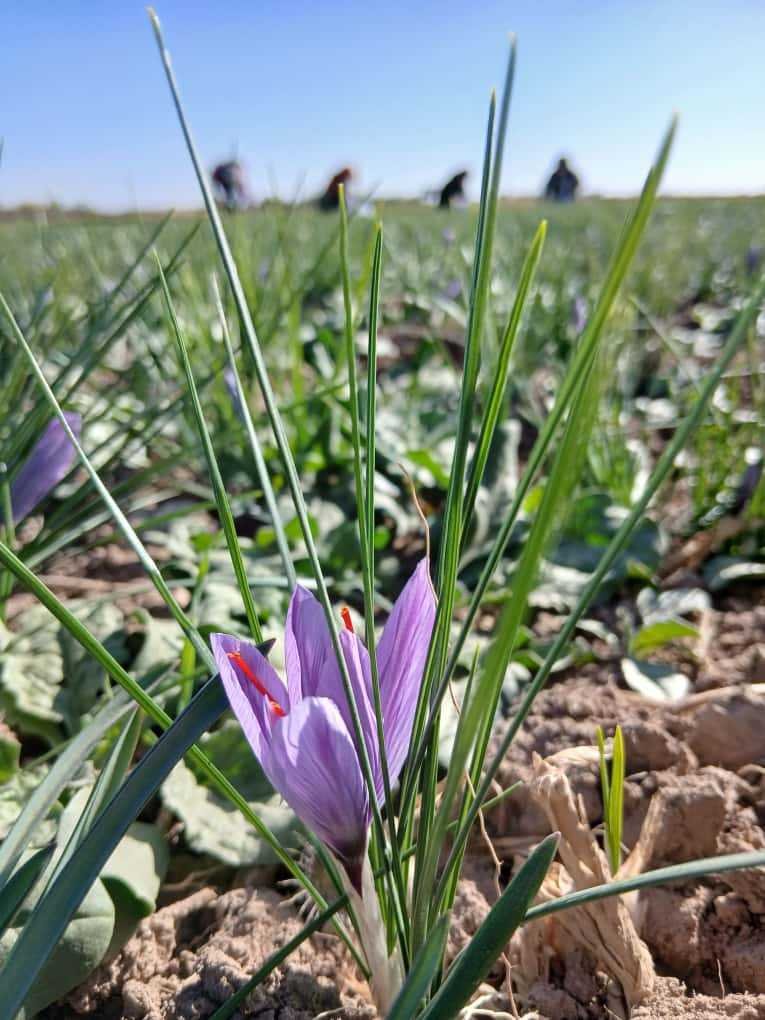
Saffron flowers on a Saffrona saffron farm in western Afghanistan
Saffron field in western Afghanistan – Saffrona cultivation, 2026
WESTERN AFGHANISTAN → EUROPE

From saffron fields in Afghanistan to the European market

Saffrona's saffron originates from family-run production structures in western Afghanistan.

We work directly with locally managed saffron farms, including farms managed by women, and connect traceable origin with laboratory-based quality assessment for the European market.

Our approach combines origin and agricultural experience with batch-specific quality control so that quality is not simply described, but can be measured, traced and verified.

QUESTIONS AND ANSWERS

Frequently Asked Questions about Saffron Extra Class

What is Saffron Extra Class?

Saffron Extra Class is the highest saffron quality class defined by ISO 3632-1:2025. It was introduced with the third edition of the standard in 2025 and sits above Classes I, II and III.

What is the highest ISO quality class for saffron?

Under ISO 3632-1:2025, the highest saffron quality classification is Extra Class.

Is Extra Class higher than Class I?

Yes. Under the current ISO 3632-1:2025 classification, Extra Class is positioned above Class I.

Is Extra Class the same as Grade I saffron?

No. Extra Class and Class I are separate classifications under the current standard. Extra Class is the higher of the two.

Is Premium Saffron the same as Extra Class?

Not necessarily. “Premium” is commonly used as a marketing description, whereas Extra Class refers to a defined ISO quality classification.

What Crocin value is required for Extra Class saffron?

The relevant minimum Crocin / colouring-strength value for Extra Class is 230.

Is a high Crocin value enough to make saffron Extra Class?

No. Crocin is only one of several quality parameters. Classification must consider the applicable requirements as a whole.

Is all Afghan saffron Extra Class?

No. Origin alone does not determine the ISO classification of saffron. Afghan saffron must meet the applicable analytical and quality requirements to qualify for a particular class.

Does Saffrona have Extra Class saffron?

Saffrona batch L2025-01 was laboratory evaluated and classified in the highest quality level corresponding to Extra Class under the current standard.

Does ISO itself test or certify saffron products?

No. ISO develops and publishes standards. Testing and product assessment are performed by laboratories or other competent bodies using the applicable methods and specifications.

DOCUMENTATION

Sources and basis of assessment

General information about the standard and batch-specific laboratory information are distinguished below.

ISO 3632-1:2025

Spices — Saffron (Crocus sativus L.) — Part 1: Specification. Third edition, published July 2025.

Official ISO information on ISO 3632-1:2025

Laboratory data

Batch-specific analytical data presented on this page are based on Eurofins WEJ Contaminants GmbH report AR-733-2025-00206306-02, dated 24 August 2026.

The saffron quality analysis was performed through Eurofins Analytics France – Authenticity.

Terminology

ISO 3632-1:2025 uses the official English designation “Extra Class.”

The updated Eurofins report for the Saffrona batch uses the wording “Special Grade.” This page uses “Extra Class” when referring to the classification terminology of ISO 3632-1:2025.

SAFFRONA

Origin matters. Measurable quality does too.

Saffrona combines traceable Afghan origin with laboratory-based quality assessment and direct cooperation with saffron-producing communities.

Discover Saffrona
Saffrona logo – Afghan saffron from Herat
  • Home
  • Shop Saffron
  • Saffron Academy
  • For Businesses
  • Our Story
    • Saffron Women of Herat
    • About Saffrona
  • Deutsch
Afghan saffron. Rooted in Herat.
Hand-picked in Afghanistan and packed in Germany. Discover our saffron, its heritage and the people behind Saffrona.
Facebook Instagram Youtube

© 2025–2026 Saffrona. A brand of RUMI Saffron UG (haftungsbeschränkt). All rights reserved.

Terms & Conditions | Privacy Policy | Legal Notice

Wir verwenden Cookies, um unsere Website technisch bereitzustellen, Inhalte zu personalisieren und statistische Auswertungen durchzuführen. Sie können selbst entscheiden, welche Kategorien Sie zulassen möchten. Ihre Auswahl können Sie jederzeit ändern. Weitere Informationen finden Sie in unserer Datenschutzerklärung.
Du kannst deine Zustimmung jederzeit widerrufen, indem du den den Button „Zustimmung widerrufen“ klickst.