
Saffron evening tea is a light, caffeine-free infusion for an unhurried cup at the end of the day. A few threads, hot water and a short steep put warmth and delicate flavour at the centre of the ritual.
What is saffron evening tea?
A plain water-based saffron infusion without tea leaves or caffeine. This version uses hot water below boiling and a gentle steep. The name describes when you might enjoy it, rather than a special medical preparation.
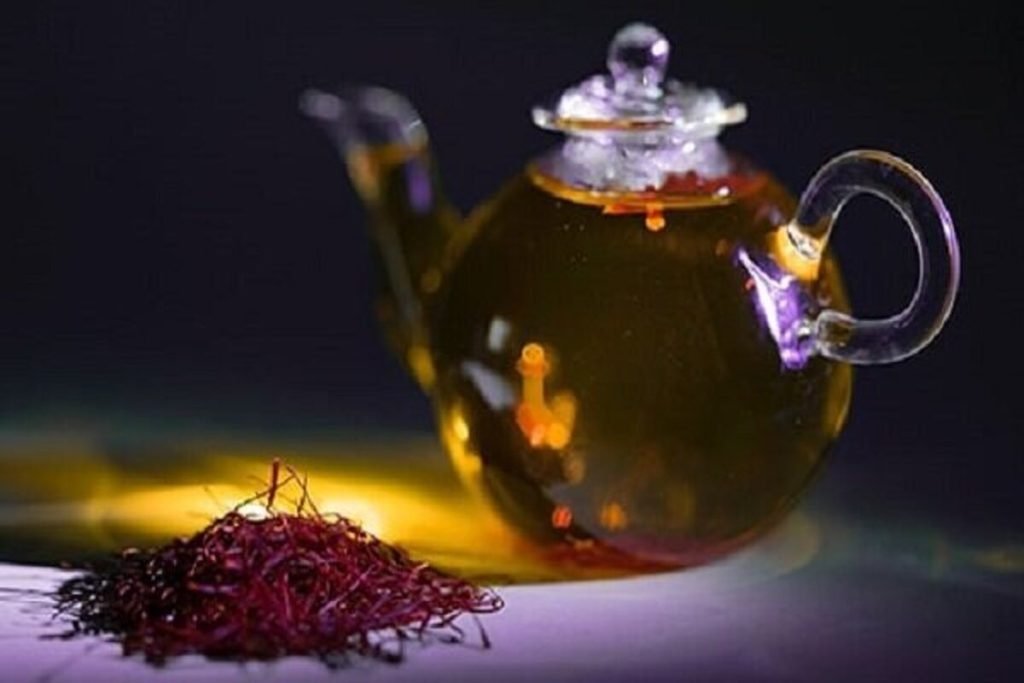
Ingredients for one cup
- 3–5 saffron threads
- 250 ml hot water, approximately 70–80°C
Thread sizes vary. The stated quantity is for culinary flavouring, not a supplement or therapeutic dose. Genuine saffron and careful steeping influence the colour and aroma.
How to make saffron evening tea
- Place the saffron threads in a heatproof cup.
- Pour over hot water at approximately 70–80°C.
- Steep for 5–7 minutes.
- Allow to cool to a comfortable drinking temperature and enjoy slowly.
Use a thermometer if you want to follow the temperature precisely. For an alternative preparation using hotter water and lightly crushed threads, see our plain saffron tea recipe.
An evening cup without caffeine
Serve after a long day or during a quiet break. The drink can accompany your own evening routine, with attention to its warmth and aroma. This recipe does not establish a sleep or mood benefit and is not presented as a sleep remedy.
For a creamier alternative, explore warm saffron milk. For a mild herbal variation, try saffron herbal infusion.
Frequently asked questions
Is it intended as a daily health treatment?
No. This is a culinary recipe for flavour and enjoyment, not a prescribed frequency or therapeutic preparation.
When should I serve it?
Whenever a quiet evening cup suits your routine. No specific time is needed for the recipe.
Is saffron evening tea caffeine-free?
Yes. The listed ingredients contain neither tea leaves nor caffeine.
Explore the Academy
Part of Saffron Drinks & Teas in the Saffrona Academy.
Further reading
A randomised placebo-controlled study of saffron extract supplementation and mood. This examines a supplement rather than the tea above; its findings should not be treated as benefits of a brewed cup.